The 2026 Paid Ads Strategy: Mastering Google & Meta Ads for Landscape, Hardscape, and Outdoor Living Contractors

The 2026 Paid Ads Strategy: Mastering Google & Meta Ads for Landscape, Hardscape, and Outdoor Living Contractors
Lead costs are up, and most landscape, hardscape, and outdoor living contractors are still running paid ads like it’s 2021. That mismatch is why your cost per lead might be climbing and your close rate might be stuck.
The good news: the fix is not “just spend more.” In 2026, winning paid ads in the green industry comes down to two things:
- Protecting the lead ROI with speed-to-lead and a real sales process (your CRM is part of the ad).
- Upgrading how you target and measure using first-party data and conversion tracking that actually reflects your real sales.
Below is a practical, contractor-focused playbook for Google and Meta ads in 2026, including the exact priorities that drive lower lead costs and more booked estimates.
Why implementation matters more than ever in 2026
Paid ads can generate qualified inquiries, but only if your system converts them into revenue. Lead platforms are expensive right now. So the real question is:
What percentage of your paid leads become booked calls, and what percentage become sales?
When you improve your speed-to-lead and follow-up quality, the math changes instantly. You pay less effectively with the same budget because you waste fewer leads and respond faster and more professionally.
The elephant in the room: leads are getting more expensive
Across the board, contractors are seeing higher costs in:
- Google Ads (especially cost per click and cost per inquiry)
- Meta Ads (still costly, but not always as volatile)
- Other lead sources, like Angi and Yelp, where many contractors report weaker returns
That is why the foundation of paid ads is no longer “set up campaigns and hope.” It’s about making sure every inbound lead is handled as a priority.
Speed to lead and CRM follow-up: the foundation of paid ad success
Josh Blakeley’s core point is simple: Your CRMand follow-up process matter as much as your ad spend. Leads are expensive, so speed and trust-building are how you protect the investment.
What “speed to lead” actually means
Speed to lead is the time between when someone reaches you and when your team responds. It applies to:
- Form submissions
- Phone calls
- Text inquiries
- Social messages
When a homeowner contacts you, they have already built some trust by taking action. Your job is to capitalize on that moment by responding quickly and clearly.
Trust comes next: follow-up quality beats “we’ll get back to you.”
Paid traffic often has a different intent than SEO traffic. People who land on you from ads may not have done the same level of research. That means your follow-up needs to do the trust-building work earlier in the process.
At minimum, implement:
- Instant lead routing (your CRM should assign the lead to the right person automatically)
- Multichannel follow-up (text and email, not just voicemail)
- Answering coverage (AI answering is better than unanswered calls or dead voicemail loops)
- Calendar-based booking so the homeowner can schedule after hours
A key detail: voicemail is uncertain. An AI agent (when implemented well) can gather information and interact in ways that feel more “alive” than a missed call.
First-party data vs. third-party cookies (2026 reality)
Third-party cookies and older tracking methods are shrinking. Privacy changes and cookie limitations have made targeting and measurement less predictable.
That’s why first-party data is now your competitive advantage.
What first-party data looks like for contractors
- Your customer email list (past quotes, bids, and inquiries)
- Your CRM data (lead source, follow-up outcomes, and sales results)
- Website visitor behavior that you can tie back to your own platforms through proper setup
Conversions that actually matter
Instead of treating every form fill as equal, set up conversions that match your sales reality:
- Leads (form submissions or qualified inquiry actions)
- Phone calls measured by meaningful duration (Google commonly uses calls longer than 60 seconds as a default signal)
- Bookings (scheduled consults, discovery calls, or physical job bookings)
- Sales (when possible, send sale outcomes and revenue signals back to improve algorithm learning)
When Google and Meta see what “good” looks like from your actual sales results, lead quality tends to increase and lead costs can improve over time.
Google Ads updates for 2026: keyword intent, match types, and landing pages
Google has been rolling out updates, including automation-focused formats like Performance Max and newer AI-driven approaches. But the biggest wins still come from getting the basics right.
Start with search intent and keep control over targeting and relevance.
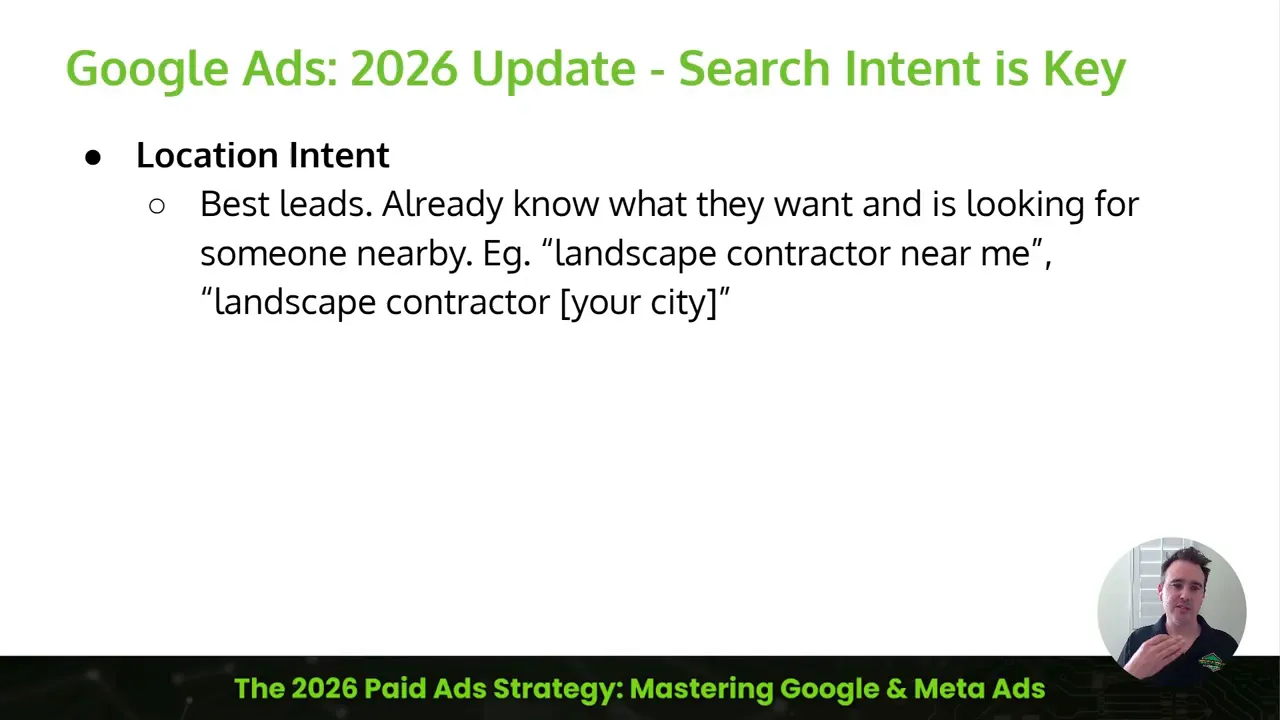
1) Start with location intent (your best leads)
When homeowners search in your area, they already want a local contractor.
Your strongest keyword intent tiers should look like:
- Location intent: “landscape contractor,” “landscaper,” “landscaper company” plus your city/metro area
- Near me and service + city: “near me” and “city + service” style searches
- General service intent: only after location intent is covered or the budget is left over
- Research mode (price/cost searches): use search terms data to identify which ones actually convert
2) Use phrase match and exact match first (don’t let Google push broad)
Google will try to expand your reach, often by encouraging broad match. In most contractor accounts, that creates irrelevant clicks and wasted spend.
Instead:
- Phrase match: tighter relevance than broad, often manageable with negatives
- Exact match: highest-intent searches, usually higher CPC but more qualified inquiries
Avoid starting with broad match unless you already have a strong negative keyword list and proven relevance.
3) Build dedicated landing pages for each service
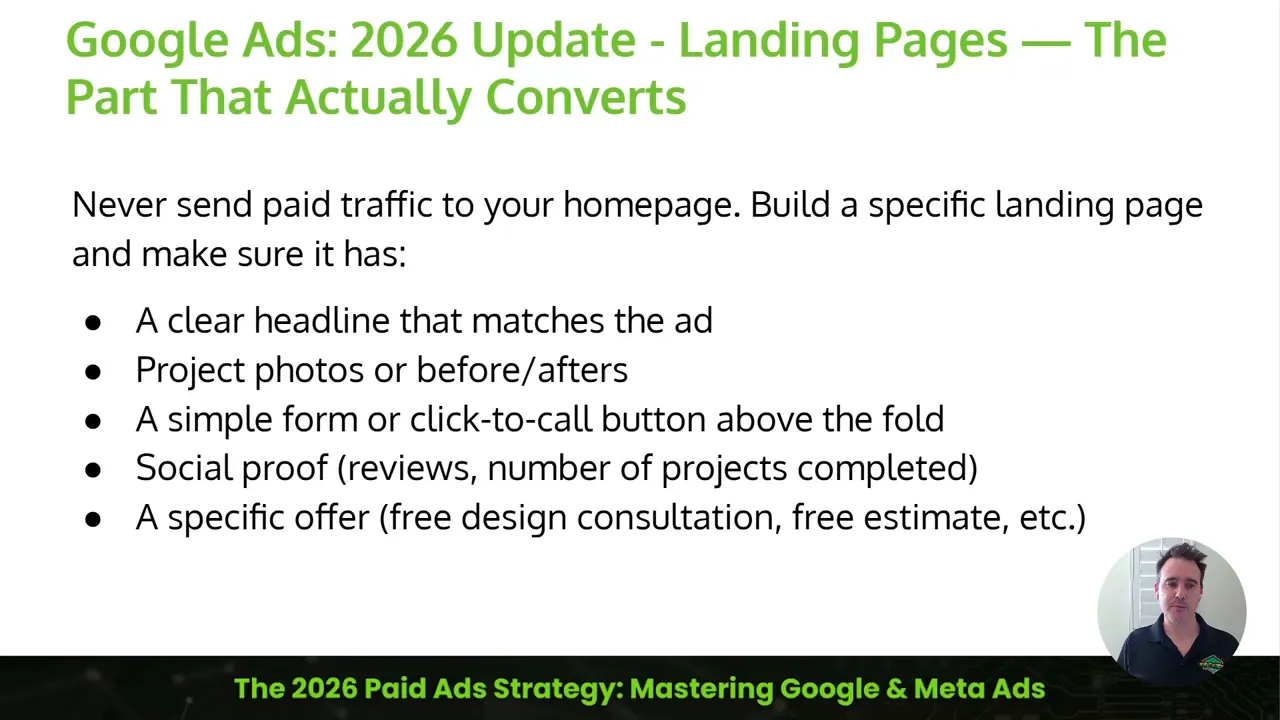
Do not send paid traffic to your homepage if you can avoid it. Paid clicks need a focused page that matches the ad promise.
If you target “retaining walls,” the landing page should be about retaining walls, not five different services.
A conversion-focused landing page should include:
- A clear headline that matches the ad and location
- Project photos and before/after examples
- A prominent form near the top
- Click-to-call so homeowners can reach you immediately
- Trust builders: reviews, number of projects, credibility proof
- Offers: financing info, seasonal offers, or a free design consultation
- Videos: testimonials and walkthroughs (if available)
When your landing page is mismatched or generic, your effective cost per lead rises because fewer clicks convert into calls or bookings.
Meta Ads updates for 2026: what the algorithm wants from your creative
Meta Ads are built around delivery on Facebook and Instagram. For local service businesses, Facebook often drives a big share of clicks, but you should plan as if Instagram traffic is part of the flow.
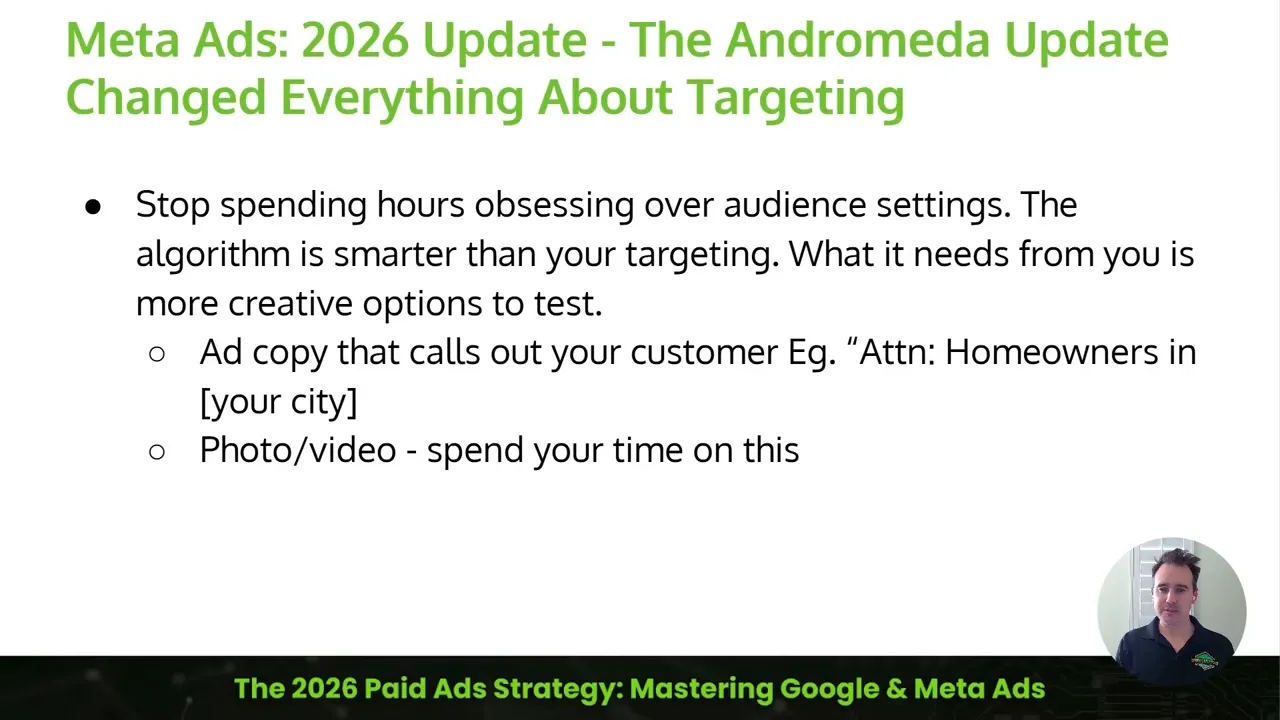
The main mindset shift in 2026: less obsession with targeting, more investment in creative.
Meta is reading your ad copy and creative
Where Google relies heavily on search intent, Meta increasingly uses what it learns from:
- Your ad copy
- Your images and video
- Engagement and conversion signals
You still need to speak to the right person, but instead of overbuilding targeting settings, focus on messaging and media.
1) Call out homeowners and your service area in the first sentence
Your first sentence matters. The goal is to make it obvious you are talking to:
- Homeowners (not “businesses” or vague audiences)
- The region you serve (county, city, metro area)
Then explain the service you offer.
2) Stack 10 to 20 creative variations and keep refreshing
Meta rewards variety. Instead of running one or two ads, build a library of variations and test combinations.
Practical starting target:
- 10 to 20 creatives per campaign approach
- Keep photos and videos fresh
- Test different angles that lead to bookings and sales
3) Get on video (introduce your team and build trust fast)
If there’s one standout recommendation: use video.
Meta performs well when your creative helps people feel like they already know your company. Video formats that commonly work:
- Introductions: who you are, what you stand for, why you love the work
- Testimonial videos
- Finished project walkthroughs
- Short real-style clips with your team and job sites
You do not need a full production crew. Even straightforward smartphone video can outperform polished content if it builds trust.
Quick “Haven’t got time” checklists for 2026
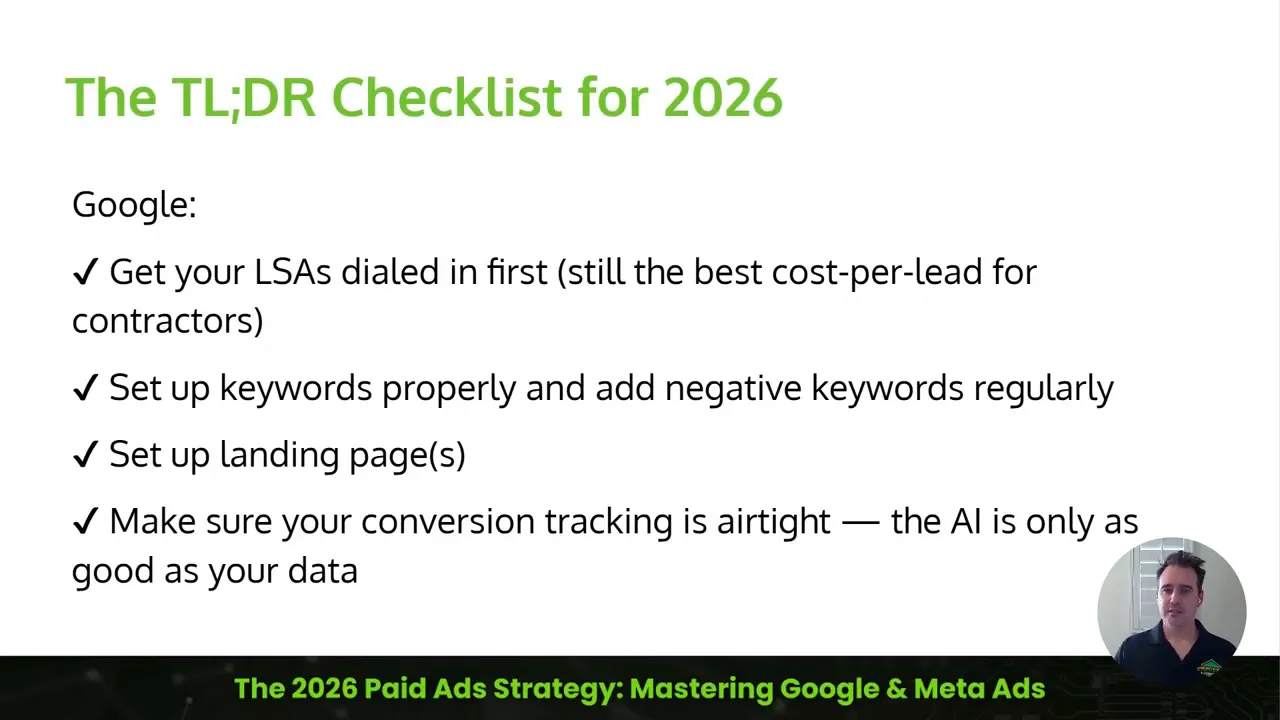
Google Ads checklist (paid search + Local Services)
- Get Google Local Services Ads dialed in (if you use them)
- Use location intent keywords first (service + city/metro)
- Start with phrase match and exact match
- Build negative keywords for:
- Services you do not offer
- Locations you do not serve
- Competitor brand names (if relevant)
- Send traffic to dedicated landing pages, not your homepage
- Verify conversion tracking so the platform optimizes to your real outcomes
Meta Ads checklist (creative-led performance)
- Don’t overcomplicate audience targeting (let the algorithm do its job)
- Put homeowners + service area in the first sentence
- Build 10 to 20 creative variations
- Get on video: introduce your team and show projects
- Refresh creative regularly to maintain performance
Make Google and Meta work like a system
The biggest takeaway in 2026 is that paid ads are not just a traffic problem. They are a lead-to-sale system problem.
If you want lower cost per lead and more booked estimates, focus on the full chain:
- Speed to lead + CRM follow-up (turn inquiries into appointments)
- First-party data + conversion tracking (teach Google and Meta what a “good lead” really is)
- Intent-based Google keyword strategy (location first, match types controlled)
- Creative-led Meta strategy (video, trust, and fresh variations)
- Landing pages built for paid conversion (service-specific and credibility-rich)
If you implement these steps, you are not just buying clicks. You are creating a predictable pipeline for revenue from landscape, hardscaping, and outdoor living.
Recommended next steps
- Audit your current paid lead handling: how fast do you respond, and what happens after the first message?
- Check conversion tracking: are you measuring leads and bookings accurately, not just clicks?
- Build or upgrade your first-party data assets: email list capture and CRM outcomes.
- For Google: refocus on location intent, tighten match types, add negatives, and use dedicated landing pages.
- For Meta: create more videos and creative variations, and refresh consistently.

Josh Blakeley
Founder of Landscape & Hardscape Contractor Marketing and author of Backyard Empire. A member of the California Landscape Contractors Association (CLCA), Josh has helped contractors book more high-value jobs through done-for-you marketing built only for outdoor living pros.