The 2026 Website Playbook: Get Your Landscape and Hardscape Business Cited by AI
AI is changing how homeowners find contractors. Search results are shifting from keyword lists to concise recommendations powered by AI agents. If your website isn’t structured for machines to understand it quickly, AI will skip over your business — even if you’re the best in town. The good news: most of the actions that make your site AI-ready also improve conversion and trust with real people.
Why the shift matters now
Search today increasingly treats queries as requests for an answer rather than a list. That means artificial systems scan the web, summarize options, and recommend a few businesses. This creates a zero-click reality where the AI is the primary audience and the human often receives a single concise recommendation or shortlist.
Core concept: move from keywords to entities
Traditional SEO focused on keywords. Modern search looks at entities — structured concepts AI can understand. For a landscape or hardscape business, the three critical entities are:
- Brand entity — your business name and consistent online footprint.
- Location entity — cities, neighborhoods, service areas described clearly.
- Service entity — the specific services you offer (retaining walls, paver patios, outdoor kitchens) with examples and media.

SEO fundamentals you can’t skip
These are the non-negotiables that make your site both human- and machine-friendly.
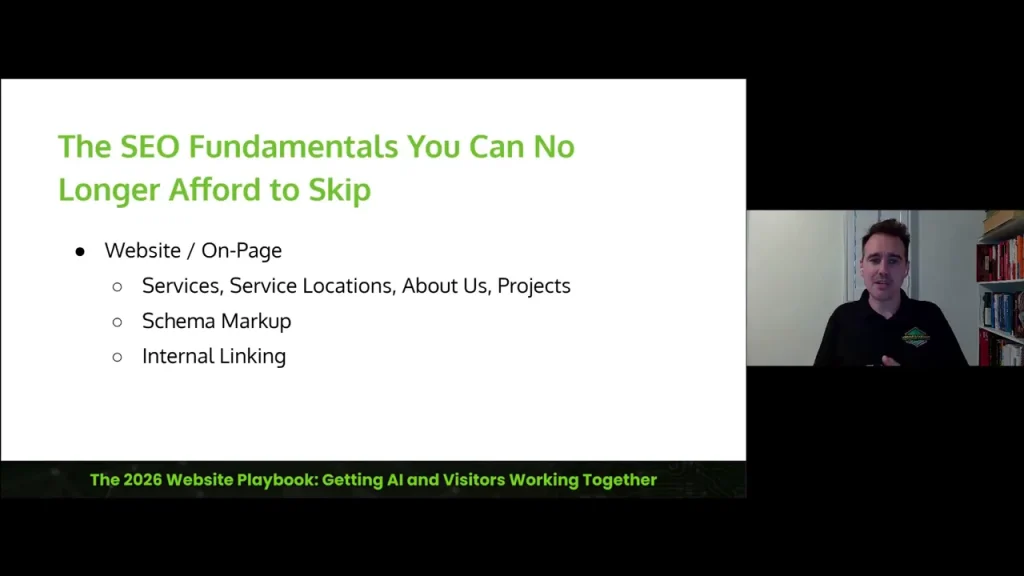
- On-page content for every service and location — build dedicated pages for each service and each primary location you serve. Include project galleries, case studies, and embedded videos.
- About and team pages — age in business, owner story, certifications, and crew descriptions increase credibility signals AI reads.
- Project pages — use photos, video, materials used, neighborhood details, and client testimonials next to each project.
- Schema markup — implement structured data (JSON-LD schema) so AI and search engines can parse your business details and offerings.
- Internal linking and clear site hierarchy — menus and links should show what’s most important. Make it easy for machines to traverse your structure.
- NAP consistency — name, address, phone must match exactly across all listings. Inconsistent data confuses AI agents.
- Backlinks, press mentions, and brand citations — local press, directories, and partner sites increase your authority.
Preparing for agentic AI search
Agentic AI refers to tools that act on behalf of users, such as scouring websites, comparing options, and producing recommendations. To get selected by agents:
- Make business data machine-readable (schema, structured content, consistent citations).
- Offer clear signals about service area and specialties so the agent can match intent (for example, “specialist in stone retaining walls for San Diego hillsides”).
- Provide project proof: images, before/after, videos, testimonials tied to specific projects and locations.
- Keep your site fast and mobile-friendly. Agents favor sources that load reliably.
How to get summarized, cited, and selected by AI
AI systems rely on a mix of on-site content, reputation data (reviews), and external citations. Focus on these tactics:
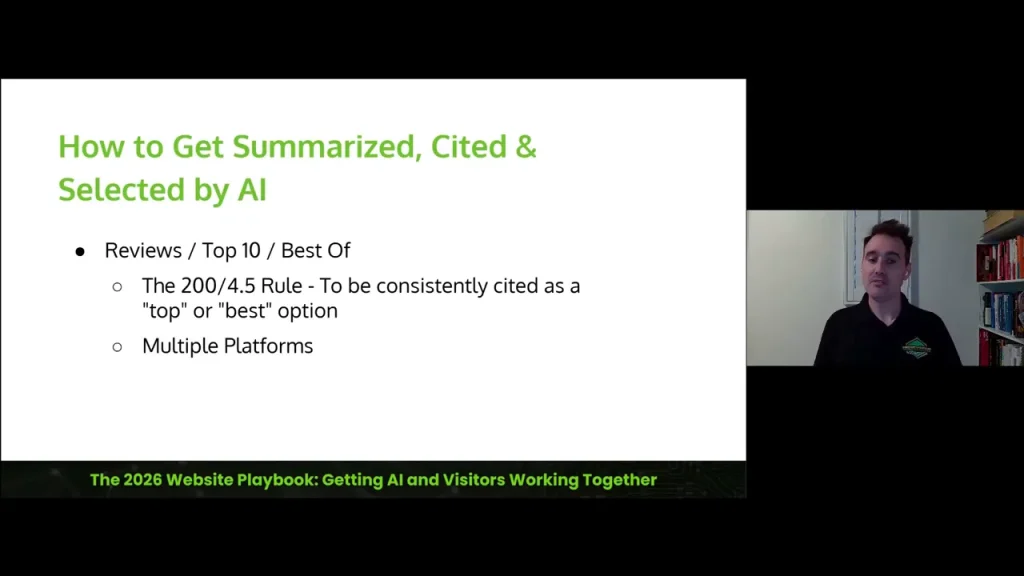
The 200 / 4.5 rule
Aim for roughly 200 reviewswith an average rating of around 4.5 across the major platforms. Google Business Profile remains the top signal, but agents also reference Yelp, Facebook, and industry directories. Volume plus quality creates consistent “top” citations.
Pricing transparency
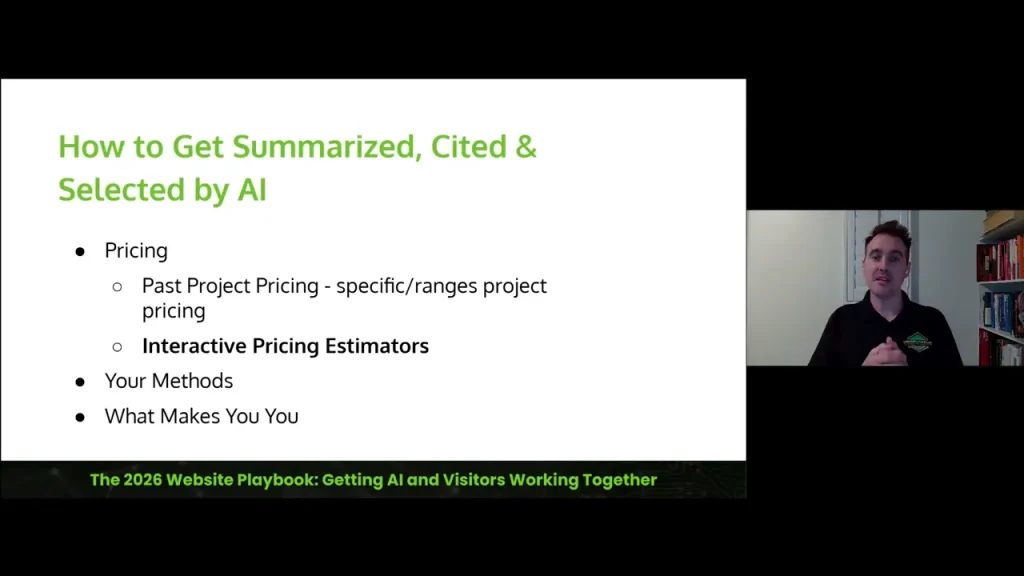
Agents look for pricing cues. Many contractors avoid listing prices, which hands the advantage to those who do. You don’t need exact quotes — provide starting prices, price ranges, and articles on pricing factors that explain what affects cost.
Interactive pricing estimators are especially powerful. They:
- Give visitors immediate context about the budget.
- Increase time on site (strong behavioral signal).
- Capture leads and allow automated follow-up.
Show your methods and differentiators
Explain your process in step-by-step detail. Answer questions agents might ask: Do you handle permits? Do you use a dedicated drainage plan? What warranties do you offer? Anything you can say that competitors can’t becomes a selection advantage.
Use structured project and comparison content
Create comparison pages (e.g., pavers vs. concrete vs. stamped concrete), how-to guides, and detailed project write-ups. Agents love authoritative, structured content they can extract and cite.
Practical implementation checklist
Use this as a step-by-step to make your site AI-ready.
- Audit and standardize NAP across all listings.
- Build or expand pages for every service and major location.
- Add project pages with images, video, and client quotes.
- Install schema markup for LocalBusiness, Service, Review, and Project.
- Publish pricing anchors: “Starting at” prices, ranges, and cost-factor articles.
- Install a pricing estimator or lead capture tool tied to email/CRM follow-up.
- Collect and syndicate reviews across Google, Yelp, Facebook, and industry sites; aim for 200 / 4.5 over time.
- Track press mentions and earn local backlinks.
- Ensure fast mobile load times and a clear internal link structure.
Final takeaways
- AI agents are already acting as gatekeepers for contractor recommendations. Treat them as a primary audience.
- Entities beat keywords: build your brand, location, and service signals clearly and consistently.
- Reputation and pricing matter. Reviews at scale and transparent pricing give agents usable data to recommend to you.
- Most changes improve both AI visibility and customer conversion. Better content, structured data, and clear processes help real people and machines alike.
Next steps
Start with a quick audit: confirm your NAP, review count, and whether each service/location has a dedicated page. If you can add one thing this week, publish a pricing page with starting ranges and a short article explaining cost drivers for your most common projects.
Resources to consider
- Schema markup guides for LocalBusiness and Service
- Interactive pricing estimator tools
- Local citation services that clean up NAP consistency
- Review request systems that feed multiple platforms
The next handful of years will reward businesses that make their data easy for machines to read and easy for people to trust. Focus on entities, structure, reputation, and transparent pricing — and your business will be in the mix when AI hands out recommendations.