Your 2026 Digital Marketing Blueprint for Landscape, Hardscape & Outdoor Living Contractors
https://youtu.be/KGG4oI7cOn8?si=O2RE2WiVQfCLjm4P
The next 12 months will define which outdoor living businesses thrive and which struggle to keep up. This blueprint zeroes in on the practical, high-impact strategies contractors need: where to drive leads, how to convert more of them, and how to measure and optimize spend so every marketing dollar works harder.
Table of Contents
- Start with clear goals and a real snapshot of your business
- The Accelerated Growth Roadmap – drive, convert, optimize
- The lead stack: organic, paid, and database
- Brand building – online and in person
- Video and multimedia are non-negotiable
- Maximize every marketing dollar – track and train
- Conversion optimization – the biggest lever you already have
- Ads and landing pages – make every campaign specific
- Every lead is an asset – build and protect your database
- Simple measurement framework to follow monthly
- Three practical action steps for 2026
- Quick self-audit checklist
- How do I make my business show up in AI-driven search results?
- What should I prioritize if my marketing budget is limited?
- Which paid channel gives the best leads for outdoor living contractors?
- How can I use AI without losing authenticity?
- What’s a practical first step toward better tracking and measurement?
- Final thoughts
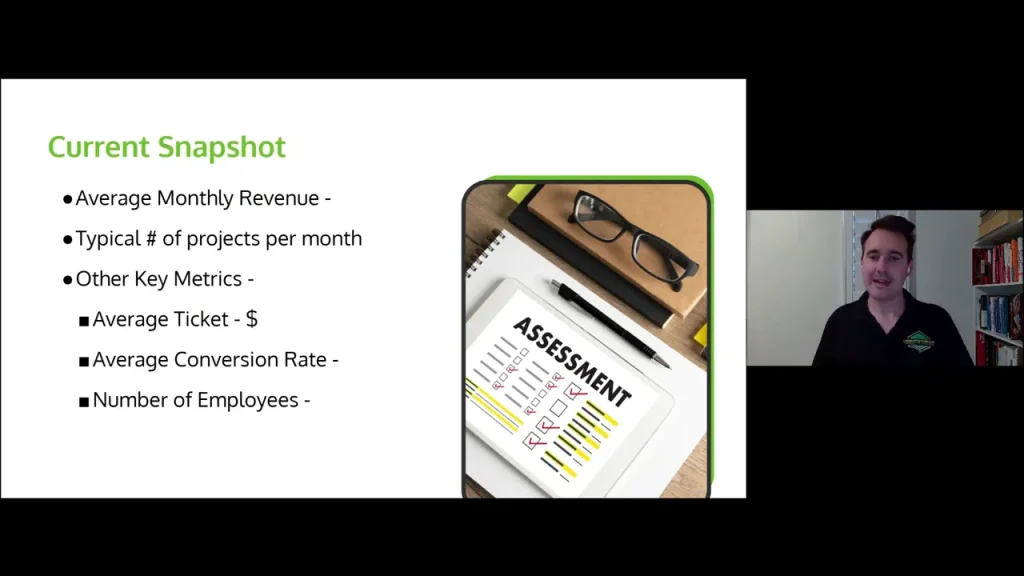
Start with clear goals and a real snapshot of your business
Before changing tactics, know where you are and where you want to go. Work backwards from your 2026 targets and build marketing plans that line up with those numbers.
- Revenue target: annual or rolling 12-month goal.
- Projects per month: how many installs, maintenances, or other services you need to hit revenue targets.
- Average ticket: what’s the typical sale value across your services?
- Sales conversion rate: how many inquiries turn into paid projects?
- Staffing and capacity: crew size goals, hires required to scale.
- Exit plan: sell, family hand, or scale for cash flow? Your exit informs how aggressively you grow.
Once these numbers are clear, you can calculate the required leads and marketing investment. For many contractors, the core question becomes: how many new projects per month do I need to reach my revenue goal?
The Accelerated Growth Roadmap – drive, convert, optimize
Treat marketing like a system with three linked stages:
- Drive leads: – use organic, paid, and your existing database to feed opportunities into your sales funnel.
- Maximize conversion: – ensure every inquiry is followed up, qualified, and moved toward a sale through website changes, sales processes, reputation, and automation.
- Measure and optimize: – track cost per lead, cost per acquisition, and which job types are most profitable so you can invest where the ROI is highest.
This is not theoretical. When the three stages work together,r you create repeatable, predictable growth.
The lead stack: organic, paid, and database
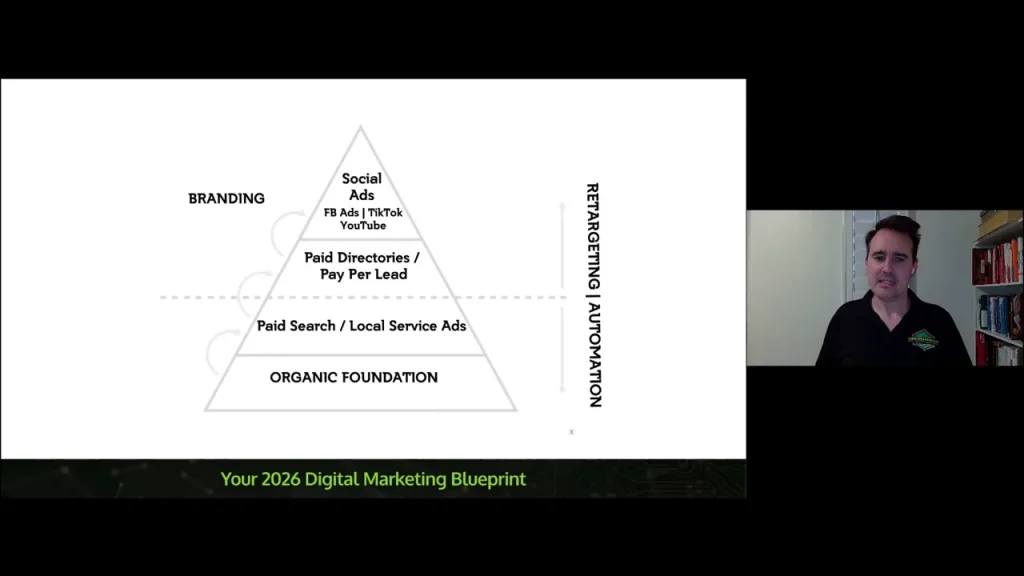
Your highest-performing channels will usually come from a mix of these three:
- Organic foundation: – traditional SEO, now enhanced by AI-driven search behavior.
- Paid channels: – Google Paid Search, Local Services Ads, Meta ads, and targeted video campaigns.
- Existing database: – past leads and customers that can be reactivated through email, text, or referral programs.
Why organic now means becoming the answer, not just the link
Search is shifting from serving links to surfacing answers. AI-driven assistants will increasingly recommend businesses directly. To be recommended, you must provide the exact signals these systems use: clear service pages, project examples, local authority, and consistent review signals across platforms.
Practical steps:
- Publish detailed service pages and project case studies with locations and outcomes.
- Keep content fresh – post new project photos, videos, and testimonials regularly.
- Ensure consistent citations and NAP (name, address, phone) across directories.
Brand building – online and in person
Brand matters more than ever. Strong brands are more likely to be searched for by name and recommended by AI systems. Brand building requires two tracks: online reputation and community presence.
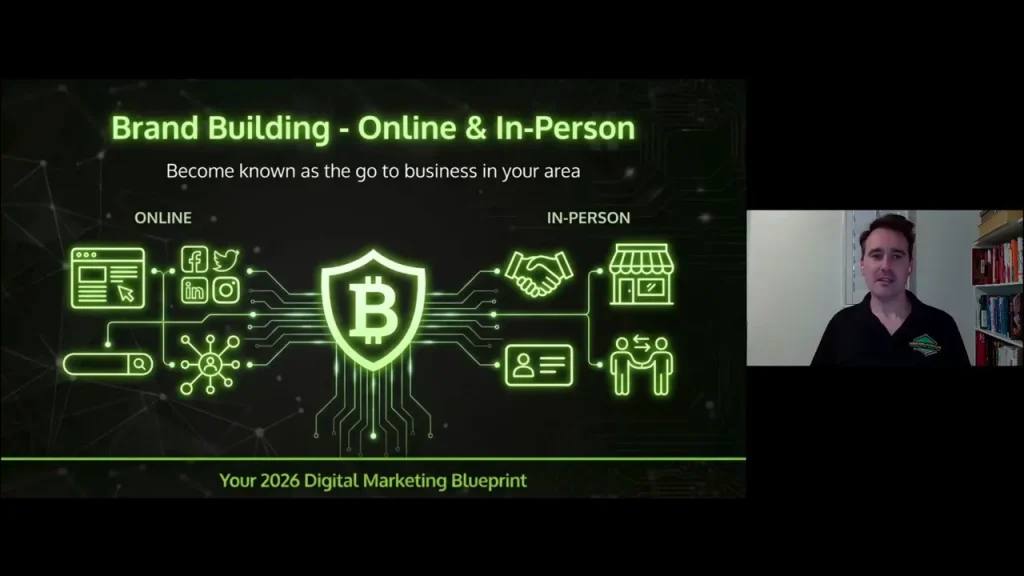
Online reputation actions:
- Collect reviews: across Google Business Profile, Facebook, Yelp, and wherever customers might look.
- Showcase video testimonials: and project walk-throughs on your website and social channels.
- Publish team bios and photos: to humanize your company and build trust.
In-person brand actions:
- Vehicle signage and yard signs that clearly feature your website and brand.
- Sponsoring local events or community programs to get your name in front of homeowners.
- Referral materials handed to customers that make it easy to recommend you.
Video and multimedia are non-negotiable
Short-form video now has its own search behavior. If you are not collecting project footage and short clips, you are missing two things: a powerful trust-builder and content that feeds social and AI discovery.
Start simple: 30 – 60 second before-and-after clips, short client testimonials, and quick tips or behind-the-scenes footage from the job site.
Maximize every marketing dollar – track and tra.in
It is not enough to spend on ads. You must know which channels produce the right leads and how channels interact. A CRM that tracks referral source, first touch, and final touch is essential.
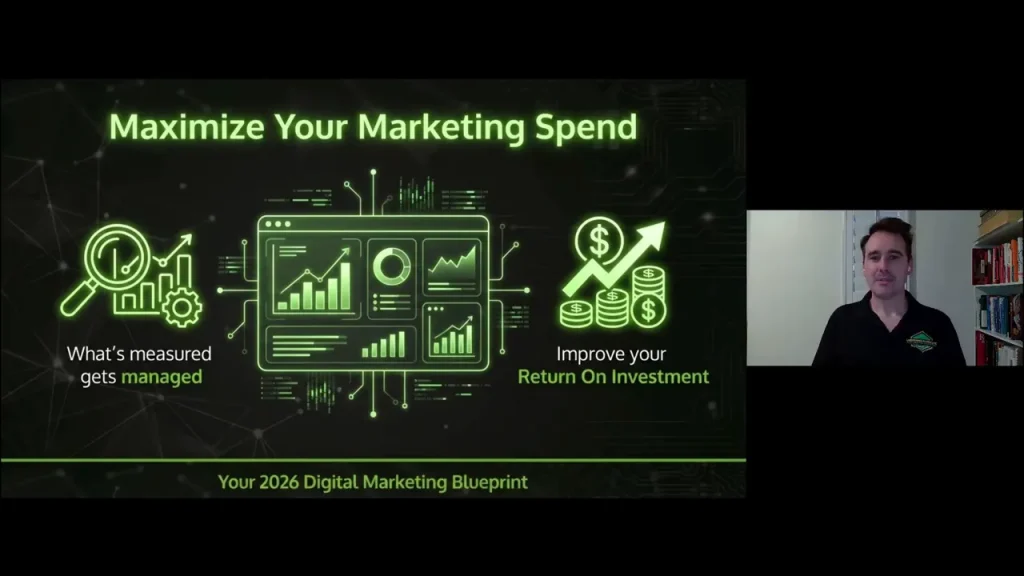
Two key benefits of good tracking:
- Measure ROI: – cost per lead and cost per acquisition become meaningful when tied to job value.
- Train ad algorithms: – platforms like Google and Meta perform better when they receive conversion signals from your CRM, so they learn who to show your ads to.
If you use paid ads, integrate them with your CRM and conversion tracking. If you rely on an agency or consultant, make sure they can demonstrate measurable improvements and use data to optimize.
Conversion optimization – the biggest lever you already have
Increasing conversion without spending more on leads is the most powerful lever to grow revenue. Small improvements in follow-up and process deliver big gains.
Why response speed matters
When someone contacts your business, expect fast action. No one wants to leave a voicemail for a contractor. Missed calls and unreturned form submissions are wasted opportunities.
Tactical moves to improve response:
- Ensure calls route to a live person during business hours.
- If you cannot pick up, use AI voice answering to gather project details and promise a callback.
- Immediately follow up inbound leads with text and email touches.
- Automate appointment booking via text or email when feasible.
Automation and CRM workflow ideas
- Automatically create a lead record for every form submission and phone call.
- Send an immediate confirmation message that sets expectations and shares next steps.
- Schedule automated nurturing touches over 30 – 90 days for leads that aren’t ready yet.
- Use text as a primary follow-up channel – it gets far higher open and response rates than email.
Conversion hacks that lift close rates
- Offer financing options to make larger projects more affordable.
- Prominently display social proof and recent project photos on landing pages.
- Use dedicated landing pages for each ad campaign that align with the ad message and audience.
- Let AI scan your reviews and surface the strongest lines for use in ad copy and landing pages.
Conversion math – a quick example
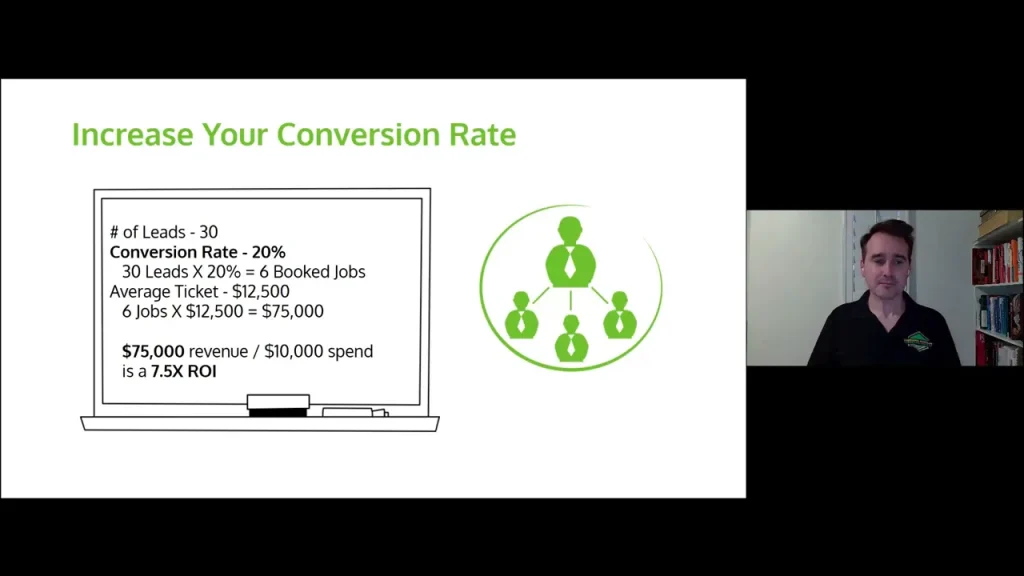
Imagine 30 leads in a month and a 20 percent close rate. That’s 6 booked jobs. With an average ticket of $12,500, that equals $75,000 in revenue. If you spent $10,000 to generate those leads, your return is 7.5x.
Improve conversion to 30 percent, and you book 9 jobs instead of 6. That raises revenue to $112,500 – an extra $37,500 without spending another marketing dollar.
This is why conversion-focused work often delivers the fastest return on time invested.
Ads and landing pages – make every campaign specific
Generic ads produce generic results. Message-match your ads to dedicated landing pages that highlight the exact service, the local area, and testimonials that back it up.
Use review-driven copy pulled from your most enthusiastic customers to increase credibility and relevancy in ad creative.
Every lead is an asset – build and protect your database
Your email list is one of the few marketing channels you own outright. Algorithms cannot take it away. Start collecting contact data on every lead and customer and use it to keep your business top of mind.
Database strategies:
- Database reactivation: – schedule regular campaigns to past prospects with seasonal offers, project spotlight emails, and helpful tips.
- Referral programs: – implement an ethical referral incentive that encourages satisfied customers to recommend you.
- Segmented messaging: – different messaging for past clients, warm leads, and cold leads increases relevance and response.
Simple measurement framework to follow monthly
Keep your reporting tight. Track these weekly or monthly:
- Leads by channel (organic, paid, referral, directory, offline)
- Cost per lead and cost per acquisition
- Close rate and average ticket size
- Jobs by type and profitability
- Customer lifetime value and repeat business rate
When you know which job types deliver the best margins, you can route budget toward channels that produce those specific leads.
Three practical action steps for 2026
Choose one high-impact action from each stage of the roadmap and commit to it for the first quarter.
- Publish three new project pages and two short videos that target your most profitable service and location.
- Implement a CRM workflow that answers leads immediately, captures basic project details, and schedules a follow-up sequence.
- Set up monthly reporting for cost per lead, cost per acquisition, and jobs by profit margin. Adjust spend toward the best-performing segments.
Quick self-audit checklist
- Do you know your 2026 revenue target and required projects per month?
- Is your website built to convert and phone calls answered live?
- Are reviews collected across multiple platforms?
- Is your CRM tracking lead source and feeding conversions back to ad platforms?
- Are you using short-form video and social proof in advertising?
- Do you have a database strategy for reactivation and referrals?
How do I make my business show up in AI-driven search results?
Focus on producing structured, helpful content that answers common homeowner questions and describes specific services and locations. Combine detailed project pages, consistent review signals across platforms, and fresh multimedia (photos and short videos). These signals make your business more likely to be recommended by AI assistants.
What should I prioritize if my marketing budget is limited?
Prioritize conversion improvements first. Speeding up responses, setting basic automation in a CRM, and showcasing social proof often delivers immediate revenue lift without increasing ad spend. Once conversion is reliable, reinvest gains into targeted paid search and localized organic content.
Which paid channel gives the best leads for outdoor living contractors?
Google search and Local Services Ads typically deliver the highest-intent leads. Combine them with video and social retargeting to stay top of mind. Always measure and feed conversion data back to the platforms to improve targeting.
How can I use AI without losing authenticity?
Use AI to automate routine touches, scan reviews for strong testimonial lines, and generate ad copy drafts. Keep final messaging authentic by editing AI output and adding real team photos, client videos, and genuine project details. Authenticity scales when supported by automation, not replaced by it.
What’s a practical first step toward better tracking and measurement?
Implement a CRM that captures lead source on every inbound (form, call, ad click). Ensure your paid platforms and Google Analytics are connected to record conversions. Start simple: track leads, close rate, average ticket, and cost per acquisition, and review these monthly.
Final thoughts
2026 will reward contractors who treat marketing as an integrated system: predictable lead generation, solid conversion processes, and continuous measurement. Focus on becoming the trusted brand in your service area, respond faster than the competition, and use data to invest in the areas where your most profitable jobs originate.
Pick one tactic from this blueprint and make it non-negotiable for the next 90 days. Small, consistent momentum in these areas compounds quickly.

Josh Blakeley
Founder of Landscape & Hardscape Contractor Marketing and author of Backyard Empire. A member of the California Landscape Contractors Association (CLCA), Josh has helped contractors book more high-value jobs through done-for-you marketing built only for outdoor living pros.