Why Your Google Local Services Ads Aren’t Getting Leads in 2026
Google Local Services Ads can still be an absolute weapon for landscape, hardscape, and outdoor living contractors.
But if your LSAs have slowed down, become inconsistent, or are just not producing the way they used to, there is a reason for it. Usually, it is not random. Google has shifted how these ads work, what influences visibility, and what separates businesses that get calls from those that barely show up.
The big story in 2026 is simple. Reviews, responsiveness, Google Business Profile health, and tighter targeting now matter more than ever.
If you get those right, LSAs can perform really well. If you ignore them, your lead flow can dry up fast.
What Google Local Services Ads actually are
Local Services Ads are Google’s pay-per-lead platform for local service businesses. Instead of paying for clicks, you typically pay when Google determines that a call or message is a legitimate lead.
That matters because it is built for intent. These are often people actively searching for landscaping, lawn care, hardscaping, or outdoor living services in a specific area.
For contractors in the green industry, LSAs rank at the top of search results and can become a major driver of leads. But only if your account is set up in a way that helps Google trust you and helps customers choose you.
The Google Guaranteed badge is gone, and that is not the real issue anyway
One of the cosmetic changes that has confused many businesses is the shift away from the old Google Guaranteed branding.
That badge has effectively been discontinued in the way many contractors used to think about it. There is now a more standard, verified presentation across businesses.
Here is the important part. The badge itself is not what is winning leads anymore.
What actually separates one contractor from another inside Local Services Ads now comes down mostly to:
Your reviews
Your response speed
Your ability to handle leads professionally
If your brochures, website, trucks, or other marketing pieces still mention Google Guaranteed, it is worth updating that language.

Your Google Business Profile now directly affects your LSA performance
This is one of the biggest platform changes.
Google has tied your Local Services Ads much more closely to the Google Business Profile for that location. That means your profile is no longer just an SEO asset for Maps and local search. It is now part of your LSA foundation too.
If you operate multiple locations, this can actually be a strong opportunity. Separate locations with separate Google Business Profiles can support separate LSA setups, helping you target markets more strategically.
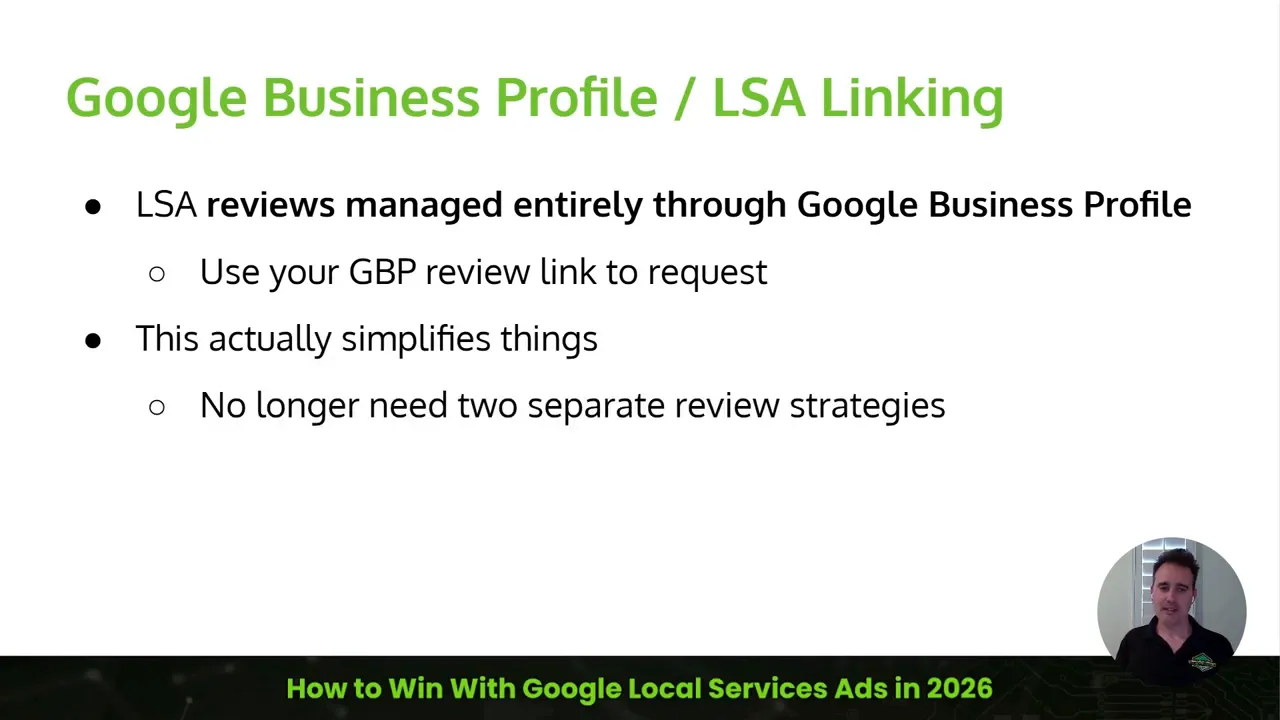
There is also a practical upside. Review collection is simpler now.
Instead of treating LSA reviews and Google reviews like two different systems, you can focus more heavily on your Google Business Profile review process. That gives you a single review strategy that benefits both your local SEO and your Local Services Ads.
That is the good news.
The downside is bigger than most businesses realize. If your Google Business Profile is suspended, unverified, or incomplete enough to cause issues, your LSAs may stop showing.
So if leads suddenly dropped and nothing else makes sense, check your profile status immediately.
Do not overlook this. A suspended profile can choke off your ad visibility until it is resolved.
What to do right now with your Google Business Profile
Make sure the profile is verified
Make sure the business information is accurate
Keep photos updated
Complete your business bio and service details
Use your Google review link consistently
If suspended, gather the requested documentation and get it reinstated fast
The 2026 LSA ranking algorithm: what actually moves the needle
If you are not showing up, you are not getting a chance to compete. That is why ranking factors matter so much with LSAs.
In 2026, the most important signals are becoming clearer.
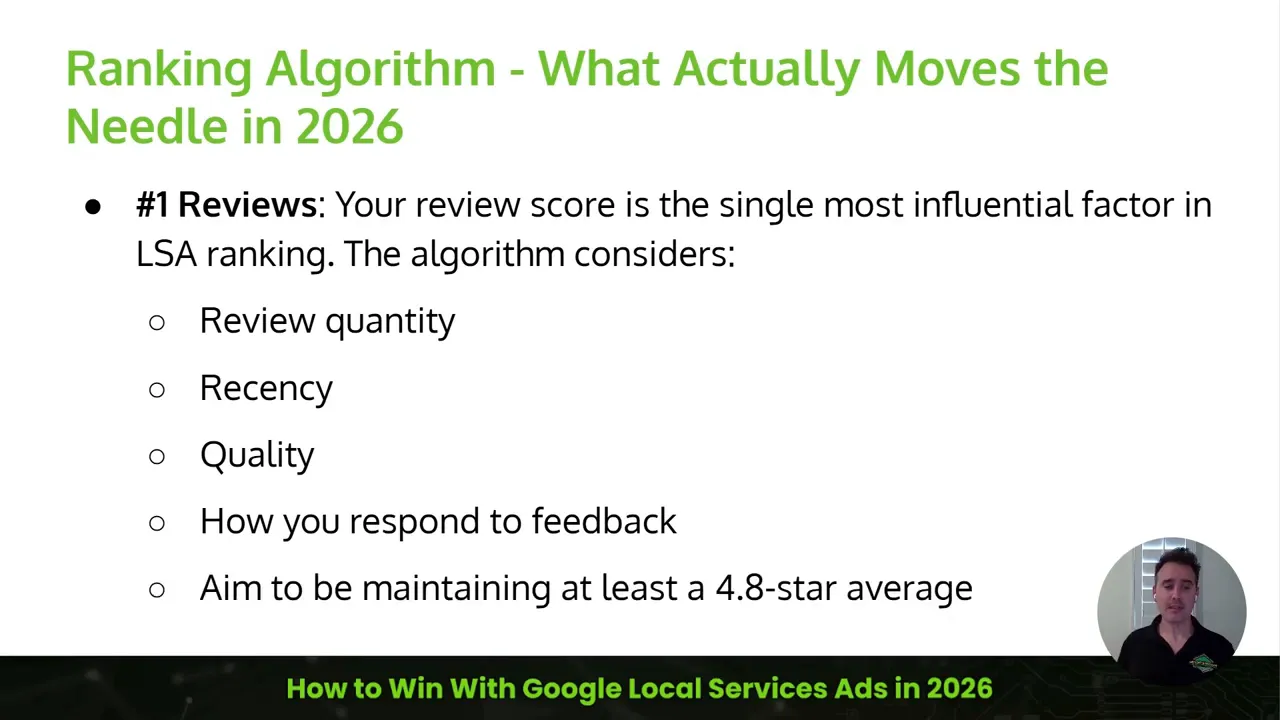
1. Reviews are the biggest ranking factor
The strongest influence on LSA visibility right now is your review profile.
And this is not just about having a decent star rating. Google is looking at several layers:
Quantity of reviews
Quality of reviews and overall rating
Recency of new reviews
How you respond to feedback
That makes sense from both Google’s side and the customer’s side.
If one contractor has 100 reviews and another has 15, there is an immediate trust advantage. Even before someone calls, the more established business tends to look safer.
Then the rating matters on top of that. A strong volume of good reviews signals consistency, not just a lucky streak.
But the part more contractors need to pay attention to is recency. Google wants to see ongoing activity. Fresh reviews suggest you are actively doing work, serving customers, and staying relevant in your market.
A good baseline is to aim for 2 to 4 new reviews each month. That is not an aggressive vanity metric. It is a practical way to keep pace in a more competitive LSA environment.
As for star rating, staying around 4.8 or better is a strong target.
And no, you do not need to ask every single customer for a review. In fact, you probably should not. Be strategic. Ask the people who love your work, appreciate the process, and are most likely to leave high-quality feedback.
2. Responsiveness is now a major signal
This is the other huge category.
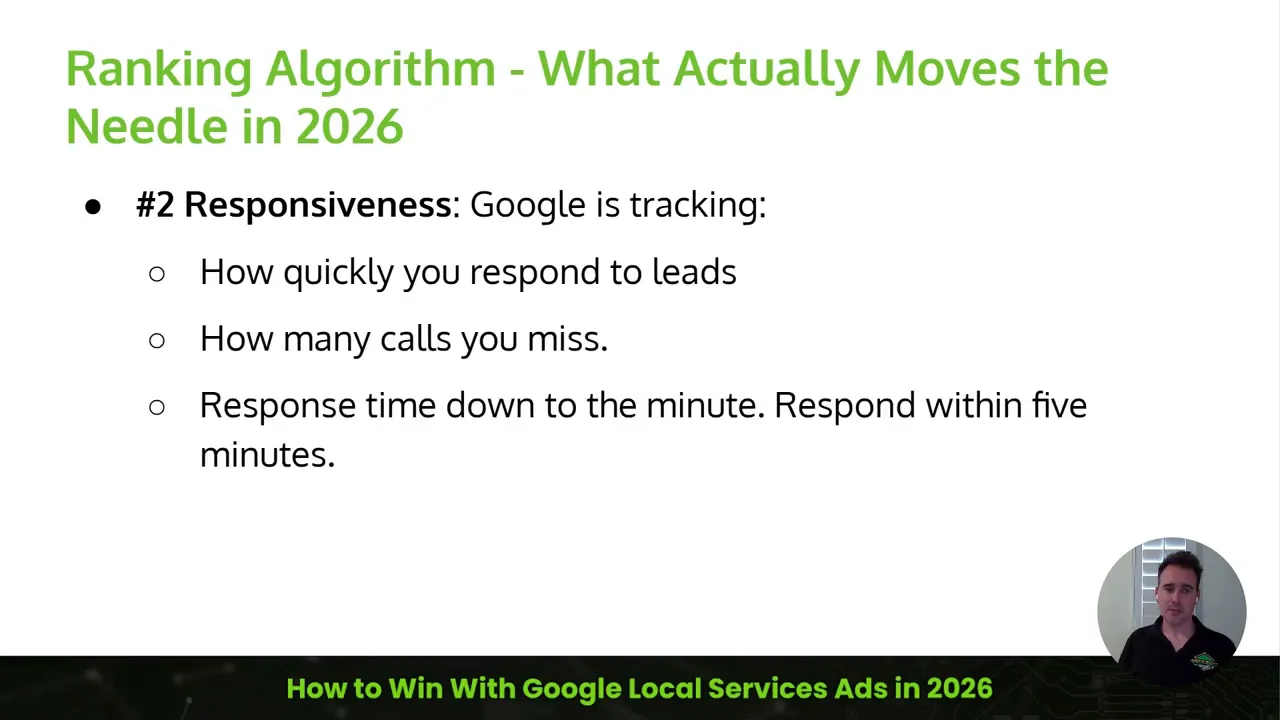
Google is tracking how quickly and professionally you handle leads coming through LSAs. That includes phone calls and message leads.
And it is getting much more sophisticated about it.
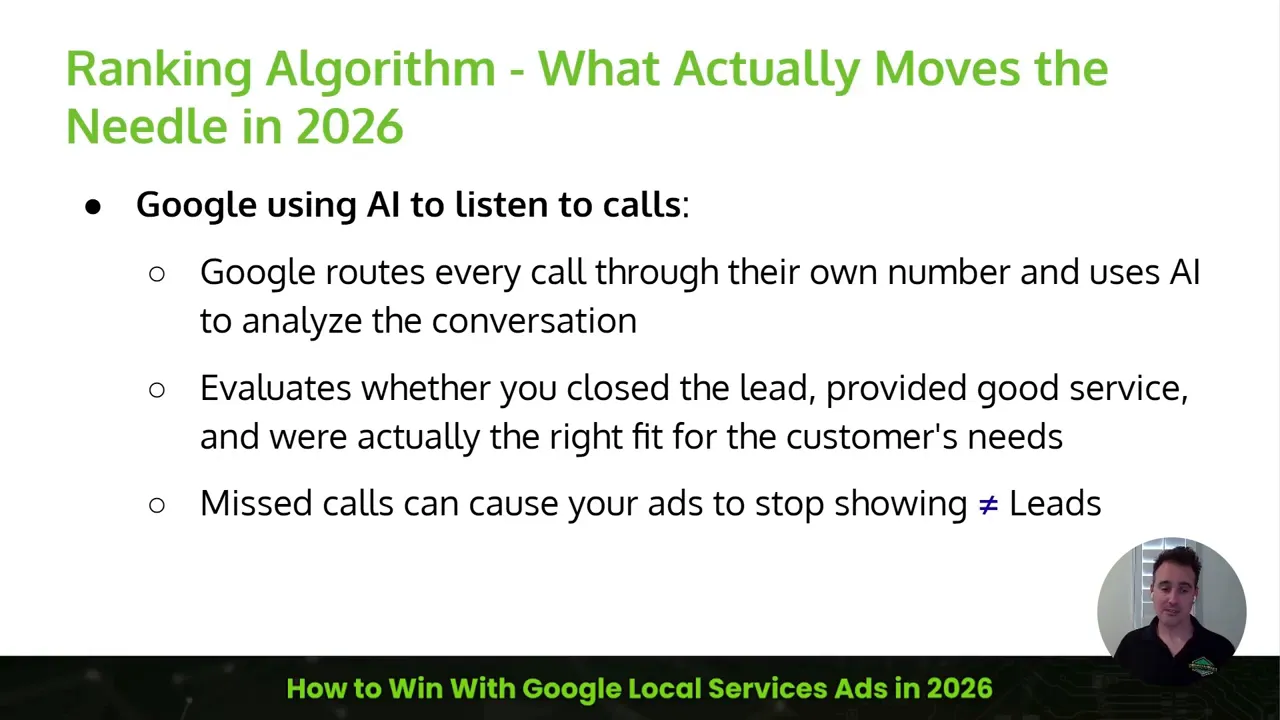
Google uses call tracking and AI analysis to understand what happens after the lead comes in. It is not just checking whether a phone rang. It looks at whether calls were answered, whether they went to voicemail, and, likely, whether the interaction appears useful and professional.
For message leads, response time matters too. If a prospect sends a message and sits there waiting, that hurts your chances over time.
A practical benchmark is to respond within 5 minutes.
If that sounds hard to maintain, especially during peak season, then build systems around it. This is where CRM workflows, routing rules, auto-replies, AI assistants, or answering services can make a real difference.
Because here is what happens when responsiveness slips: your ads can get pushed down or stop showing as often.
Miss enough calls, and you can feel that pain quickly.
How Google is likely evaluating your calls
Based on how the platform behaves, Google appears to be looking for signs such as:
Did someone answer the call
Did it go to voicemail
Was the lead a fit for the service
Was the lead in the right area
Did the conversation move toward an estimate or next step
Did the interaction sound professional
That means lead handling is no longer just an operations issue. It is a ranking issue too.
3. Proximity matters more than many contractors think
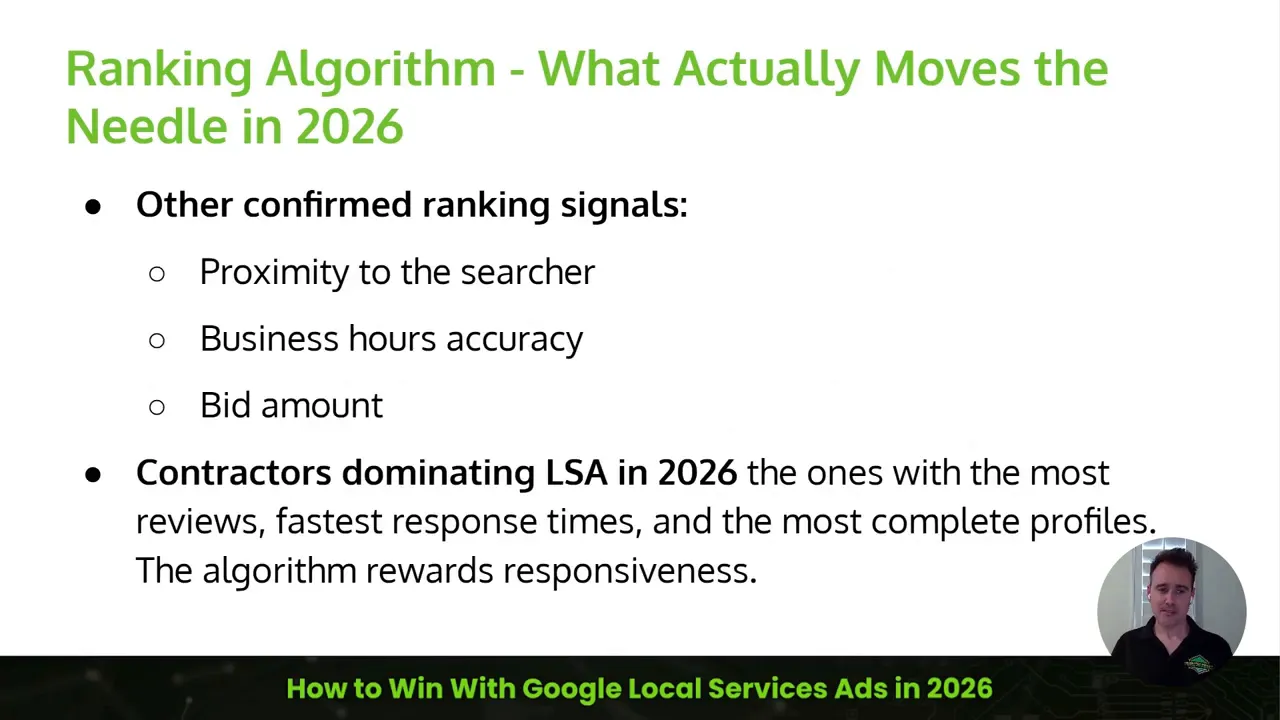
Another confirmed ranking signal is proximity to the searcher.
This is why one of the most common mistakes in Local Services Ads is setting your service area too wide.
Many contractors think a larger service area means more opportunities. In practice, it often means weaker performance.
Google wants to match searchers with nearby, relevant businesses. If you spread your service area too far, you can dilute your visibility and lose traction where you should be strongest.
The smarter move is to focus first on the area around the address tied to the profile. Tightening the service area can actually help you generate more leads, not fewer.
Smaller can mean stronger.
4. Business hours accuracy matters
This one is simple but overlooked.
If your listed hours make it look like you are available, but calls during those hours are being missed or sent to voicemail, that is a bad signal.
Set realistic business hours. Do not stretch them just to look open longer if your team cannot actually answer.
Bad hour settings can cause avoidable missed-call issues, and those missed calls can hurt performance.
5. Budget and bid still matter
LSAs are still a pay-to-play system. Budget and bid amount matter.
That does not mean you should throw money at the platform without fixing the basics. But once your reviews, profile, response systems, and targeting are in place, underfunding the campaign can limit growth.
If the ads are working, your team is handling the volume, and jobs are closing, increase the budget to capture more opportunity.
Just make sure you are building on a strong foundation first.
What the top LSA contractors are doing differently
The landscape contractors winning with LSAs in 2026 are usually doing a few things extremely well:
They consistently collect reviews
They maintain a high average rating
They get fresh reviews every month
They respond to leads almost immediately
They do not let calls die in voicemail
They keep their profile complete and active
They stay focused on tight local targeting
That is the pattern.
It is less about hacks and more about running a tighter operation than the next contractor.
AI search is changing where LSAs appear
Another important shift is happening around Google’s AI ecosystem.
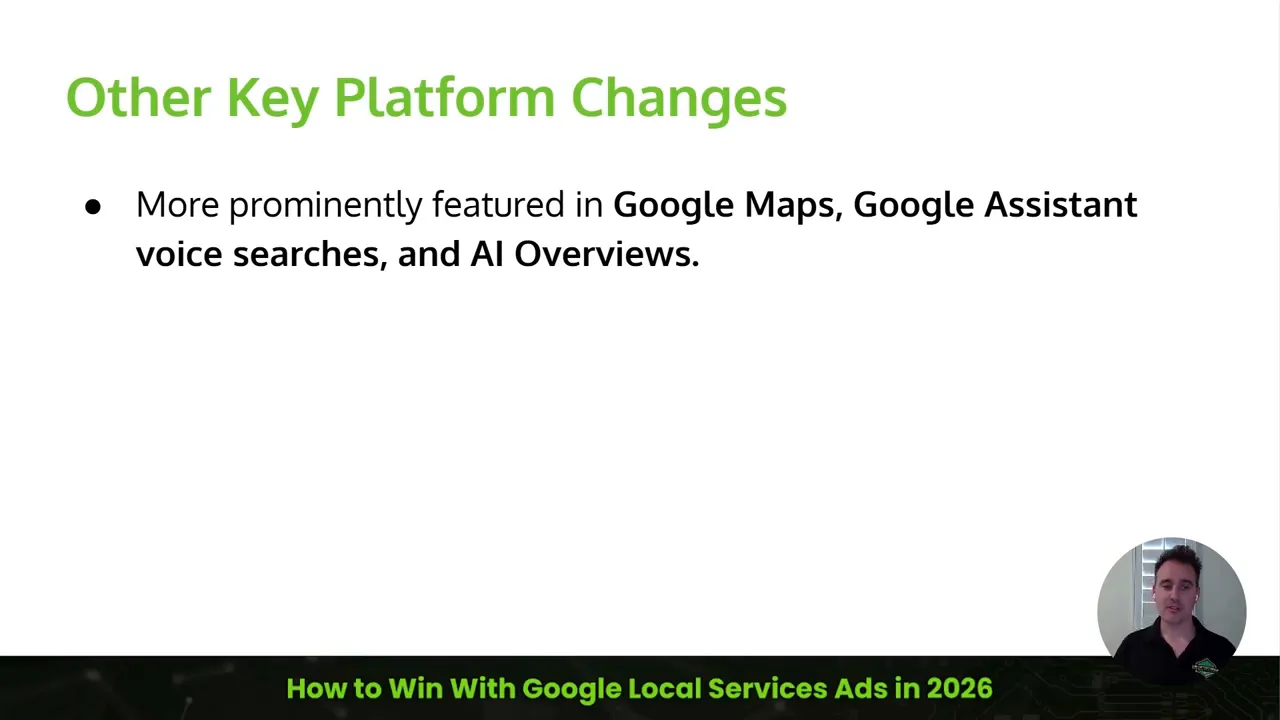
Local Services Ads are starting to show up more broadly across Google’s surfaces, not just in the classic search results. They are increasingly connected to Google Maps, voice search, Google Assistant-related experiences, and AI-generated search features.
As Google leans harder into Gemini and AI Overviews, expect that trend to continue.
That means your business information needs to be clean, complete, and trustworthy. AI systems are pulling from the same core signals:
Your profile data
Your review sentiment
Your service relevance
Your customer experience signals
If someone searches for the best landscaper nearby, Google is increasingly evaluating that answer through both structured business data and customer feedback patterns.
Why message leads deserve more attention
Many contractors still think of LSAs primarily as a phone-call channel, but message leads are becoming increasingly important.
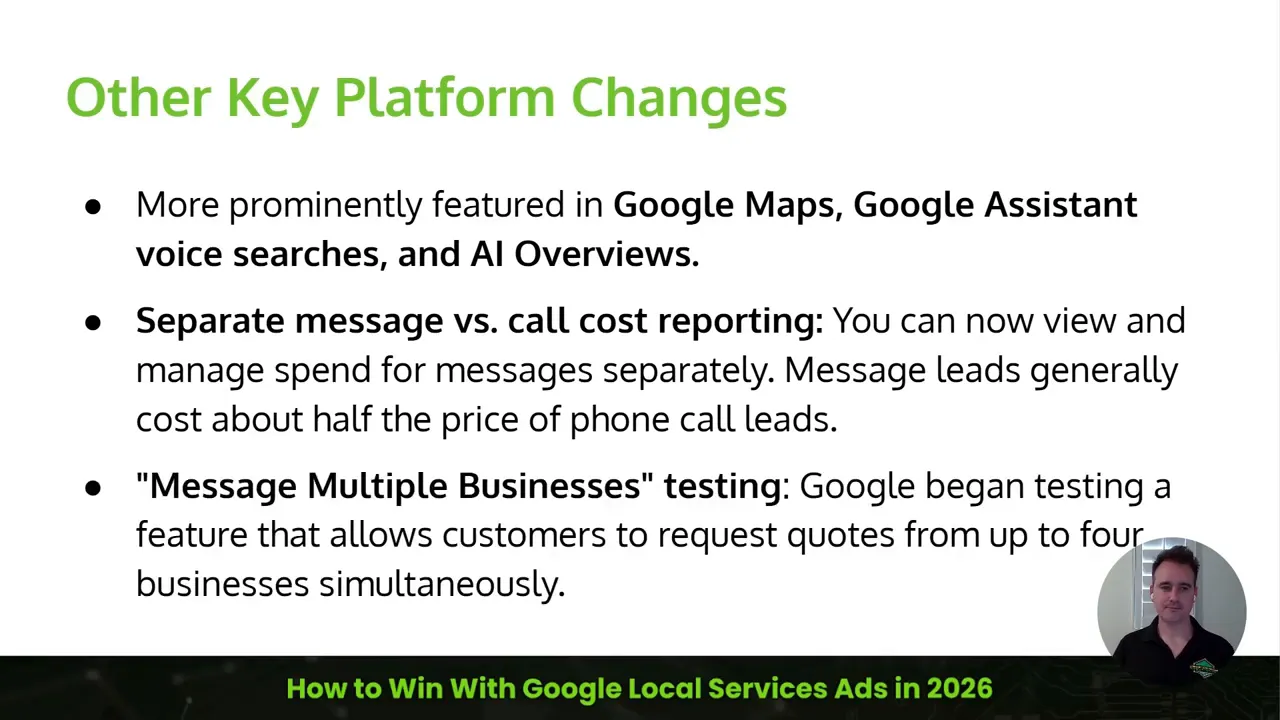
Google now provides more visibility into message lead costs, separate from call lead costs. And in many cases, message leads are coming in at roughly half the cost of phone call leads.
That is a real opportunity.
If your team can reply quickly and consistently, turning on messaging can help you:
Lower average cost per lead
Capture people who prefer texting over calling
Increase total lead volume
Potentially improve ad visibility
But the key is still response time. Do not turn on messaging if messages are going to sit untouched.
If you enable it, build the process to support it.
Google is testing multi-business quote requests
Another feature to keep an eye on is Google’s testing that lets people request quotes from multiple businesses at once via messaging.
This has not been a dominant factor in landscaping yet, but it is something worth monitoring.
If Google pushes further in this direction, it could lead to a more competitive environment for quote requests within LSAs. It would also not be surprising to see Google eventually encourage broader pricing information or pricing ranges on profiles.
Nothing to panic over. Just something to stay aware of as the platform evolves.
Your implementation checklist for better LSA results
If your Google Local Services Ads are not getting leads, or not enough, this is the short list to work through first.
Fix your Google Business Profile
Verify it, complete it, and make sure it is not suspended.
Build one strong review strategy
Use your Google Business Profile review link consistently.
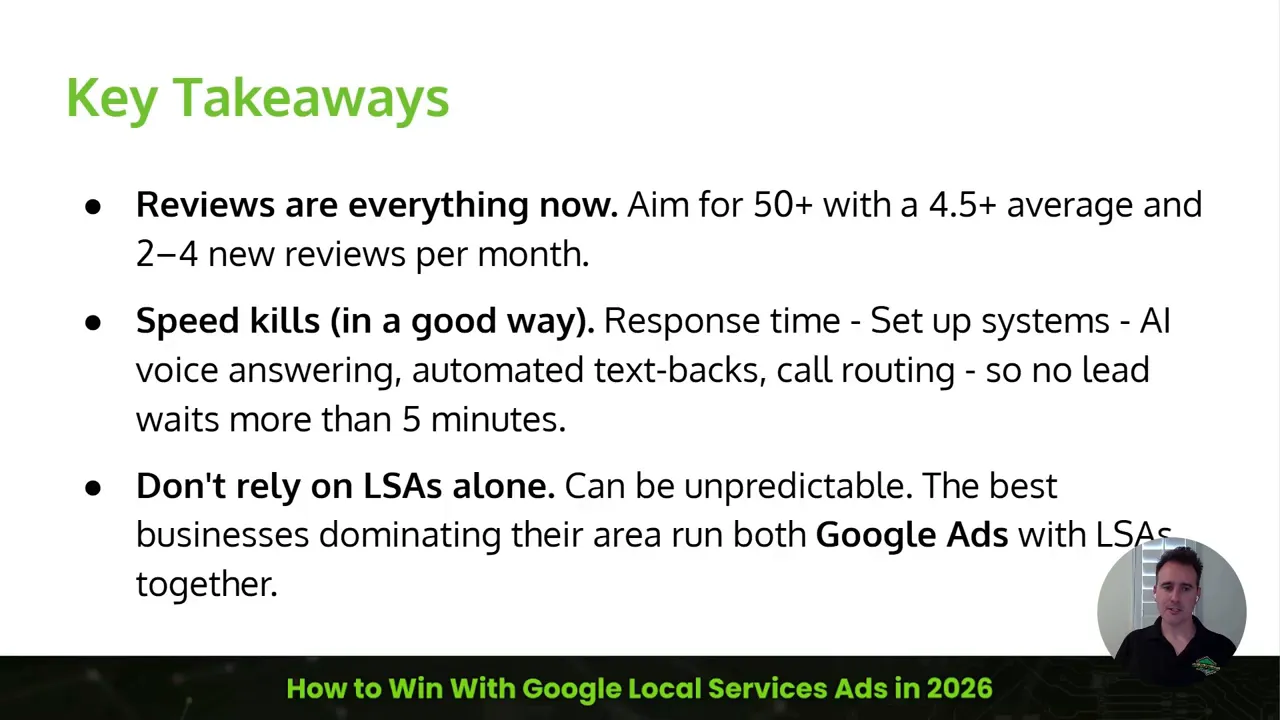
Push past 50 reviews
That is a solid benchmark for competitiveness in many markets.
Get 2 to 4 new reviews each month
Fresh activity matters.
Protect your star rating
Aim for 4.8 or higher.
Respond to every lead fast
Five minutes or less should be the goal.
Stop missed calls
Use routing, an answering service, AI voice support, or a tighter process.
Tighten your service area
Do not try to cover everywhere at once.
Use accurate business hours
Only show availability when someone can actually respond.
Turn on message leads if you can handle them
They can significantly reduce cost per lead.
Increase budget only after the basics are solid
Scale what is working, not what is broken.
Do not rely on LSAs alone
This is one of the most important practical takeaways.
Local Services Ads can be excellent. But they can also be unpredictable.
Lead flow can surge when everything is aligned. It can also drop if a profile issue pops up, calls go unanswered, or the platform shifts.
So if LSAs are your only lead source, you are exposed.
A better strategy is to run LSAs alongside other channels, especially Google Ads and a strong local SEO presence, so your business is not dependent on one system behaving perfectly all the time.
That is how you create real local search dominance, rather than hoping a single lead source carries the entire company.
The bottom line
If your Google Local Services Ads are not getting leads in 2026, the answer usually comes back to the fundamentals.
Not enough reviews. Not enough fresh reviews. Slow response times. Missed calls. A weak or suspended Google Business Profile. A service area that is too broad. Messaging turned on without systems to support it. Or complete reliance on one platform.
The contractors winning right now are not gaming the system. They are giving Google what it wants to reward:
A trustworthy reputation
Fast lead handling
A complete profile
Strong local relevance
A better customer experience
Get those pieces in place, and LSAs can still become a serious growth channel for your landscaping or hardscaping business.

Josh Blakeley
Founder of Landscape & Hardscape Contractor Marketing and author of Backyard Empire. A member of the California Landscape Contractors Association (CLCA), Josh has helped contractors book more high-value jobs through done-for-you marketing built only for outdoor living pros.