Landscape Marketing: The 2026 Review & Referral Engine
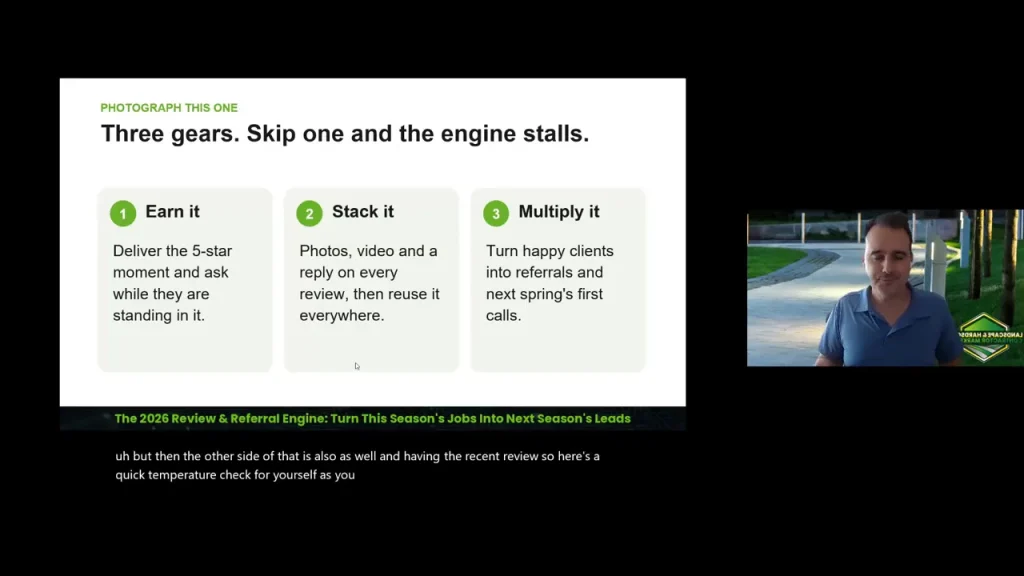
Table of Contents
Introduction: The 2026 Review & Referral Engine
Pull up your Google Business Profile. What is your rating, and when did your last review come in? If the most recent feedback is more than 90 days old, that is a good place to start improving your landscape marketing.
You have already done the hard work of winning the client, completing the project, and earning their trust. You may have paid for advertising to bring that person into the business. But once the job is finished, an opportunity still sits in that relationship.
That client can help another homeowner feel confident about contacting you. They can introduce you to a neighbor. They may need another service themselves. The question is whether you have a process for making those things happen.
A review and referral engine connects great work with a personal request, simple follow-up, and consistent use of the feedback you collect. It does not have to mean a big new advertising budget. Often, the investment is time, organization, and a little automation.
The goal is straightforward: make this season’s completed projects contribute to next season’s leads. That is practical landscape marketing, built around relationships you have already earned.
The Growth Roadmap Behind the Strategy
Our accelerated growth roadmap connects attracting opportunities, maximizing conversions, and optimizing results. Reviews and referrals fit into that broader system rather than sitting off to the side as occasional marketing tasks.
Reputation helps a homeowner decide whether to contact you. Automation helps your team follow through. Together, they support conversion by making your business easier to trust and your process more consistent.
Then there is the return on the original customer relationship. A job produces revenue, but it can also produce a testimonial, a repeat project, and an introduction to another customer. That is where landscape marketing starts getting more value from the work already coming through the business.
Think of the review and referral process as three connected steps:
Earn it: Deliver the work and customer experience worth talking about.
Collect it: Ask for honest feedback and make it easy to share.
Multiply it: Use that feedback across your marketing and maintain the relationship.
None of those steps replaces the others. Great work without a request leaves feedback uncollected. Collected feedback that never gets used leaves useful proof buried on a profile. A connected landscape marketing process makes each step support the next.
Why Reviews and Referrals Matter for Contractors
Landscape, hardscape, and outdoor living projects require trust. Homeowners are choosing a company to work around their property and create a space they expect to enjoy. Your promises matter, but another customer’s experience can make those promises much more believable.
Reviews make that experience public. Referrals carry it directly from one person to another.
That is why landscape marketing should not focus only on finding people who have never heard of your company. Past clients already know your team, your communication, and your workmanship. When the experience is excellent, you have a foundation for another conversation.
The opportunity is not necessarily cost-free. Someone still needs to make the call, send the request, organize the photos, and respond to feedback. But it often requires far less additional spending than starting every customer relationship from scratch.
The important part is implementation. You do not need to rebuild the whole business this week. Pick one or two strategies and put them into use. Adding a review request to every final walkthrough is more useful than a complicated plan nobody follows.
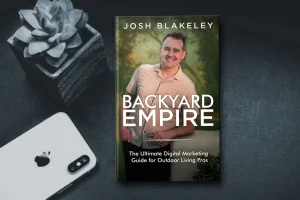
For a broader look at how this fits into landscape marketing, the free Backyard Empire book covers digital marketing strategies for outdoor living professionals. Start with the pieces your team can consistently execute.
Review Trends: Higher Ratings and Recent Feedback
The standard homeowners use to choose a business is getting higher. BrightLocal research cited for the 2026 strategy shows the share of people who only hire businesses rated 4.5 stars or higher increasing from 17% to 31% compared with the previous year.
That is a meaningful shift. It makes the quality of your customer experience an important part of landscape marketing, not just an operational concern.
Recency matters, too. A strong review from years ago says something positive about your history. Recent feedback answers a different question: Is this still the company people describe?
A homeowner may wonder whether ownership, management, or service quality has changed. Reviews from the last 90 days help provide a more current picture.
Start with a simple reputation check:
What is your current Google rating?
When was the latest review posted?
Are new reviews arriving consistently?
Do they describe the experience of working with your business?
Do any include photos of the finished project?
A busy contractor can still have a quiet review profile if nobody is asking. Your landscape marketing process should reflect the work you are doing now, not only the work you completed several seasons ago.
Asking for Reviews That Build Trust
The first step is still to do good work and run a good business. No review request fixes poor communication, an uncared-for jobsite, or a disappointing handover.
What helps move a customer from satisfied to genuinely enthusiastic? Fantastic communication, care for the property, and a personal touch from the owner where possible. Those details shape the story the customer will eventually tell.
Then ask while the experience is fresh. The final walkthrough is a natural opportunity because the homeowner is standing in the finished space and enjoying the result.
A simple request can sound like this:
“Would you be willing to share an honest Google review about your experience with us? If you have a couple of photos of the finished space, those would be helpful for other homeowners, too.”
Keep it polite and optional. Ask for their experience, not a prescribed rating or a sentence you want them to repeat.
Photos are particularly useful in landscape marketing because they connect the customer’s words with the actual work. Your own project gallery is valuable. A customer posting pictures alongside their feedback adds another layer of credibility.
Learn the review process yourself before asking someone else to use it. Know how to open your profile, locate the review option, and add photos. You can explain the steps without taking over the customer’s account or writing for them.
Make the request personal, make the process easy, and keep the feedback theirs. That is a stronger foundation for landscape marketing than chasing stars alone.
Review Guidelines and Common Pitfalls
Two considerations matter here: platform policies and legal requirements. They are not the same thing, and your review process needs to respect both.
The practical boundaries are clear:
Do not pay customers or offer discounts for Google reviews.
Do not tie compensation to a five-star or positive review.
Do not write a customer’s review and have someone else post it.
Do not have staff pose as customers.
Keep referral rewards separate from review requests.
Trust is the asset you are building. A shortcut that makes feedback less authentic works against the purpose of your landscape marketing.
Be careful with highly specific instructions about what a customer must include. Platform rules can change, including rules around soliciting particular content. Rather than making a review dependent on mentioning an employee or following a formula, invite an honest account in the customer’s own words.
We have seen photo and video reviews remain visible, and they can provide valuable context. Still, adding media doesn’t guarantee a platform will retain a review. The content needs to be genuine and appropriate.
The safest landscape marketing approach is also the simplest: earn the feedback, ask without an incentive, and let the customer describe what happened.
Building a Simple Review Collection Process
Your team should not have to remember a new marketing idea at the end of every job. Build the request into the handover process you already use.
A useful sequence is:
Complete the walkthrough: Review the finished project with the homeowner and address outstanding questions.
Capture the result: Take finished-project photos, with permission.
Make the request: Invite the customer to leave honest feedback and include their own photos if they wish.
Send the link: Make it easy to find the correct profile.
Follow up: Send a polite reminder if they intended to leave feedback but haven’t.
Monitor and respond: Track incoming reviews and acknowledge them.
This is where automation supports landscape marketing without replacing the human touch. The personal request adds context. A CRM reminder helps prevent it from disappearing into a busy week.
If you do not have a CRM set up for this, someone in the office can handle the follow-up. You do not need to delay a useful process while searching for perfect software.
Over the next 14 days, add the request to your walkthrough checklist and test the follow-up. Check what actually gets sent, whose name appears, and whether the link works. A reliable landscape marketing process starts with those small details.
How AI Search Uses Reviews
Reviews are increasingly part of what people see before they read individual customer comments. AI-generated summaries can present an overall impression of a business early in the search process.
That matters for landscape marketing because your reputation may be summarized before a prospective customer reaches your website.
Google and other AI-enabled platforms can draw on available review content to describe customer experiences. The practical takeaway is not to manufacture language for a machine. Instead, make sure genuine customer experiences are shared consistently.
Detailed feedback gives those systems more substance than a rating alone. It also gives homeowners more to evaluate when they read further.
Keep the priorities sensible:
Collect authentic feedback from completed projects.
Maintain a steady flow rather than relying on an occasional burst.
Encourage useful photos when customers are comfortable sharing them.
Use testimonials and project details on your website, too.
Photos and video may become more prominent in AI-driven discovery over time, but you don’t need to wait. They already help people understand your work. Strong landscape marketing prepares useful evidence for both the search experience and the homeowner making the decision.
Capturing Strong Video Testimonials
A video testimonial doesn’t need to be a major production. A phone, decent lighting, and a comfortable customer in front of the completed project can be enough to capture something useful.
Ask permission first. Explain what you would like to record and where you hope to use it. Then keep the conversation natural.
Three questions provide a simple structure:
What concerns did you have before choosing a contractor?
What was the experience of working with our team like?
What would you tell a neighbor, friend, or family member considering us?
Those questions move from the customer’s original uncertainty to their actual experience and recommendation. They create a story without handing the customer a script.
That is valuable landscape marketing content because future customers often have similar concerns. Hearing someone explain how the experience felt can add something a finished-project photo cannot communicate on its own.
If you intend to use the recording in advertising, make that clear when requesting permission. A simple signed release helps document what the customer has agreed to.
Once you have permission, use the testimonial where it fits: your project page, website, video channel, or advertising. One good conversation can support several parts of your landscape marketing without requiring the customer to repeat it each time.
Responding to Reviews and Immediate Action Steps
Collecting reviews is only half the job. Responding shows that your business pays attention after the project is complete.
Make prompt replies part of the process. Aim to respond within a day to give your team a clear standard. If you already have unanswered reviews, start there rather than waiting for the next one.
Your response should be relevant to the customer’s feedback and sound like your company. A specific, sincere acknowledgment is better than a generic paragraph repeated across every review.
AI can help draft replies, but test it before relying on it. Make sure it uses accurate business information and follows your tone. Read the result. If it invents project details or doesn’t sound like your team, it isn’t helping your landscape marketing.
There are also immediate opportunities to use the feedback you already have:
Choose a strong review that describes a real customer experience.
Find the matching project photos and video.
Build a project detail page around the work and testimonial.
Share approved content through your existing channels.
Arrange a video testimonial when the customer is open to it.
You don’t need a fresh testimonial to improve your landscape marketing. Sometimes the fastest win is organizing and using the proof already sitting in your business.
Turning Great Clients Into Advocates
You probably already have a few names in mind. The clients who were fantastic to work with. The repeat customers. The homeowners whose projects your team absolutely delivered on.
Those relationships are worth revisiting, even if the work finished six months or a year ago.
Start by checking in. Ask how they are enjoying the space and whether they need anything. If the relationship is still strong, explain that you are updating your project stories and customer feedback.
They may be happy to help with another photo, a short testimonial, or feedback on an additional platform where appropriate. Do not assume every review platform follows the same solicitation rules. Keep requests aligned with the platform you are using.
For landscape marketing, the opportunity is bigger than collecting another star rating. A great client can explain the experience, show how they use the finished space, and introduce your business to someone who already trusts them.
But keep the conversation about people. Do not approach every past customer with a list of things they owe your marketing department.
Strong landscape marketing grows out of a relationship that continues after the invoice. Your client should feel remembered and appreciated, not contacted only when you need a favor.
Building a Referral System
A referral conversation can begin with a straightforward question: who else do you know who has been asking about the project?
That is more concrete than a vague request to send people your way. Ask whether a neighbor, friend, or family member has mentioned doing something similar.
Then decide how your business will recognize referrals. Unlike review incentives, a separate referral program can include a thank-you, monetary reward, or charitable donation. Be clear about what qualifies and when the recognition happens.
You might choose to recognize an introduction or wait until the referred person becomes a client. Define the process and keep it separate from public reviews.
Local visibility supports this part of landscape marketing:
Use yard signs around active projects where permitted.
Put door hangers into your neighborhood process.
Use branded or wrapped vehicles.
Introduce your team to nearby homeowners.
Connect the visible work with a real person they can contact.
A neighbor may already have seen the project taking shape. A friendly conversation gives them someone to remember when their own plans become more serious.
People want to deal with people, not a faceless company. A referral system should organize that personal connection, not strip it out. The best landscape marketing process makes it easier for satisfied clients and interested neighbors to take the next step.
Seasonal Follow-Up and Referral Touchpoints
Seasonality gives you natural reasons to reconnect. This is especially useful in northern markets, but the same principle applies wherever your customers’ needs change throughout the year.
Instead of disappearing after handover, plan a few relevant touches.
Near the end of the year
Thank customers for trusting your team. Ask how the project is working for them and whether they need help with anything else.
A personal phone call or written card can make this part of your landscape marketing feel like what it should be: a genuine continuation of the relationship.
During winter planning
Ask about next year’s plans. Remind clients about other services you actually offer. If Christmas lighting is part of your business, for example, mention it before the holiday season.
Before spring
Reconnect while homeowners are thinking about their outdoor spaces. Follow up on earlier conversations and invite introductions from clients who know someone considering a project.
Use the tools that fit your business. Some contacts deserve a direct call. Others can begin with a CRM message and move into a personal conversation.
The point is not to send more messages for the sake of activity. Seasonal landscape marketing works best when you have a clear reason to reach out and a helpful next step for the customer.
Measuring Referral Revenue and Closing Checklist
Referrals can feel informal, but you should still measure them. Otherwise, itis hard to know whether your follow-up is producing opportunities or where the process needs attention.
Start with four numbers:
The number of clients or projects in the period.
The share of clients generating referrals.
Your close rate on referred opportunities.
The average value of those completed jobs.
A simple planning model is:
Client count × referral rate × referral close rate × average job value = estimated referral revenue.
This assumes one referred opportunity per referring client. If some clients introduce several people, track those opportunities individually for a clearer picture.
Use your own numbers. Referrals often arrive with trust already established, but that does not make every introduction a guaranteed sale. Measuring the actual close rate keeps landscape marketing decisions grounded in your business.
In the next 14 days
Check your Google rating and review recency.
Add an honest review request to the final walkthrough.
Test your review link and reminder process.
Reply to unanswered reviews.
Over the next month and through winter
Turn a strong review into a project page.
Invite a willing client to record a testimonial.
Organize past-client contact information.
Put your referral thank-you process in writing.
Schedule seasonal follow-up.
Before spring
Reconnect with past customers.
Follow up on project plans and introductions.
Check referral opportunities, sales, and revenue.
Assign responsibility for the steps you choose. Landscape marketing becomes more dependable when a named person owns the follow-through.
Final Takeaway: This Season’s Jobs Create Next Season’s Leads
A finished job should not be the end of the relationship. It can become a current review, a useful project story, a repeat conversation, and an introduction to another homeowner.
But those things need attention. Someone has to ask, follow up, say thank you, and make the next step easy.
You do not need to implement everything at once. Choose one or two improvements your team can make in the next 14 days. Get them working, then build from there.
Earn the trust, collect the experience, and keep the relationship alive. That is the foundation of a review and referral engine, and a practical way to strengthen landscape marketing without treating every new lead as a completely new beginning.
If you want help connecting these processes with your broader growth strategy, schedule a discovery call. This season’s work has already created relationships worth building on. Make sure your landscape marketing gives them somewhere to go next.